

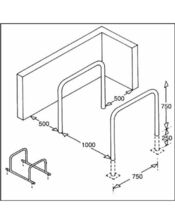
Properly planned bike parking is an important part of modern urban infrastructure. A bike rack installation diagram according to the STR (Lithuanian construction technical regulation) helps ensure that bike racks are installed in line with construction technical regulations, safety requirements and principles of convenient use. The correct layout of bike racks makes efficient use of space, keeps bikes secure and encourages residents to choose cycling as a means of transport more often.
Cycling infrastructure is now an integral part of sustainable urban planning. That is why suitable bike parking must be provided when designing public spaces, business centres, residential areas or retail zones. This category contains a bike rack installation diagram according to STR requirements, which helps you plan rack installation correctly and comply with the recommended dimensions and distances.
Bike racks must be installed in accordance with certain technical and ergonomic principles. Incorrectly installed racks can be inconvenient to use, take up too much space or even pose a danger to pedestrians.
The key principles of proper bike rack installation:
By following these principles, bike parking becomes convenient, safe and easy to use even in high-traffic areas.
According to infrastructure planning recommendations, the most important elements of a bike rack installation diagram are the distances between racks, the width of bike parking spaces and the space for passage.
The most commonly applied principles:
Depending on the project and the specifics of the site, bike racks can be installed in various configurations – in rows, groups or separate parking zones.
The bike rack installation diagram is useful for various specialists working with urban infrastructure. It allows them to quickly assess the required dimensions, determine the right number of racks and plan an efficient layout.
The diagram is most commonly used:
With a clear installation diagram, design errors can be avoided and bike racks can be made to meet all functional and safety requirements.
Cycling is becoming increasingly popular both in Lithuania and across Europe. Cities are actively investing in cycle paths, parking spaces and infrastructure that encourages residents to choose more sustainable means of transport.
Properly installed bike racks:
That is why bike parking solutions must be planned responsibly, in line with technical regulations and good practice.
Bike rack installation diagrams are applied in a variety of locations:
In such places, well-planned bike parking helps ensure convenient mobility and better quality infrastructure.