
Product code: ESC-LENA
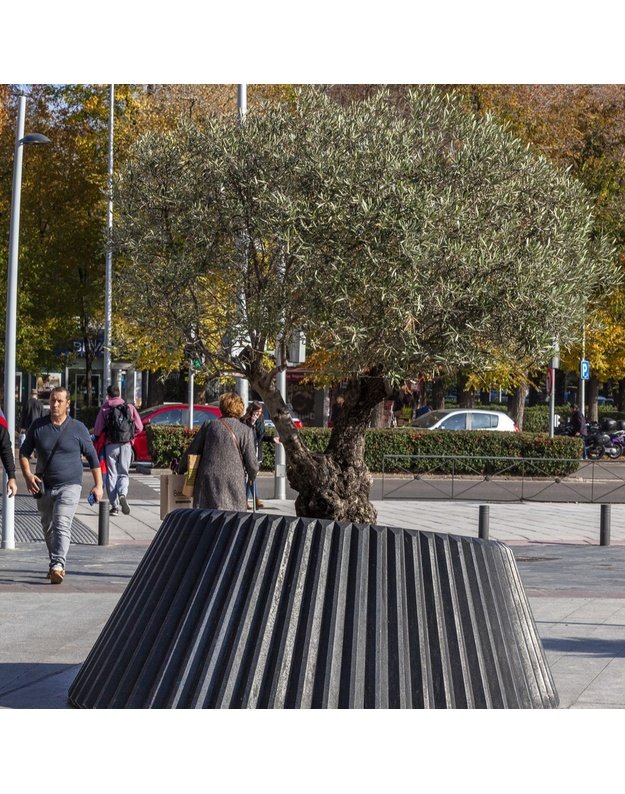
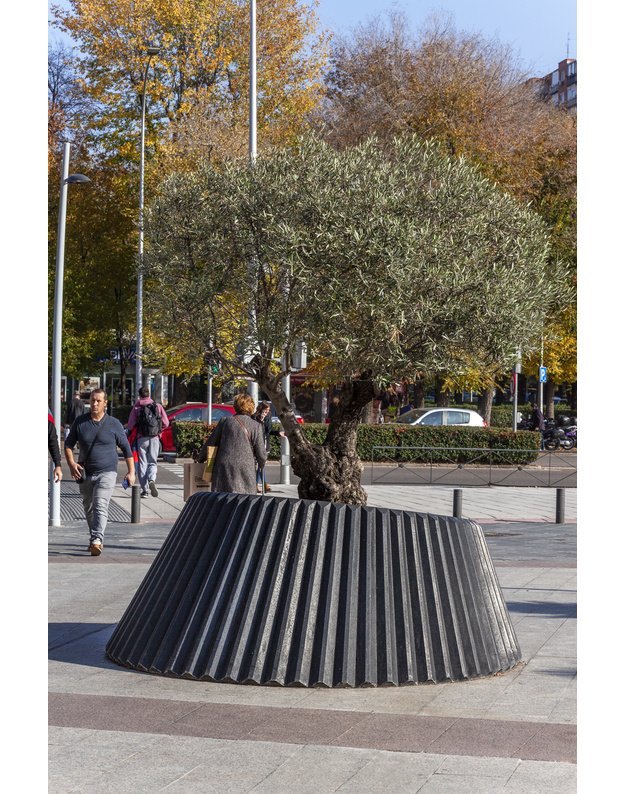
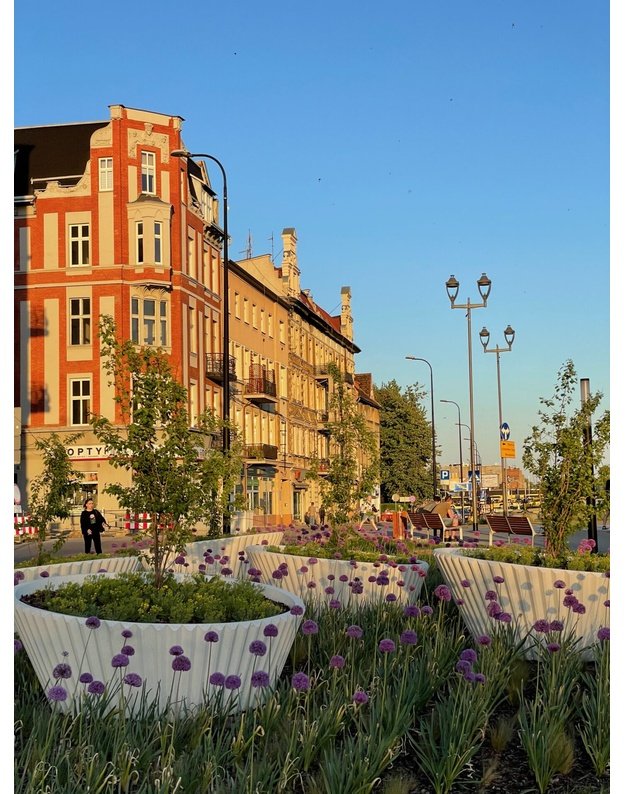
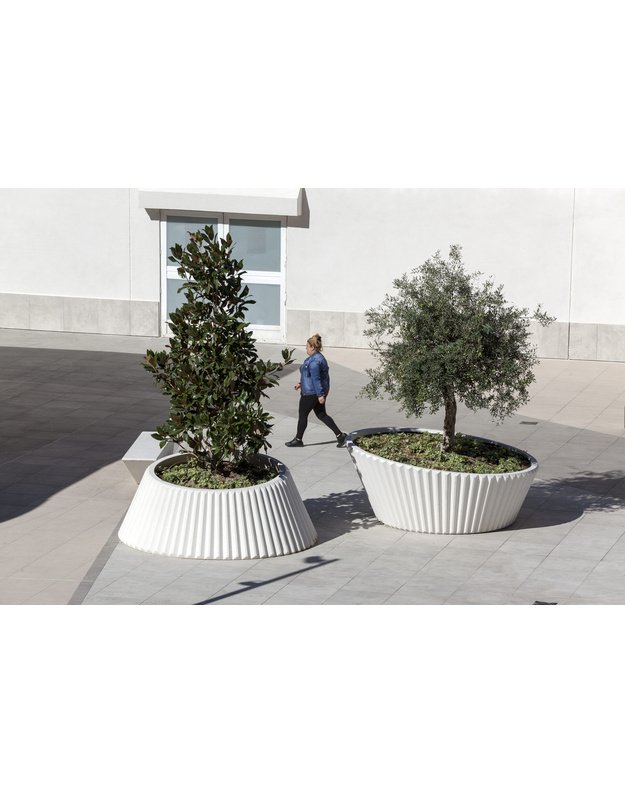
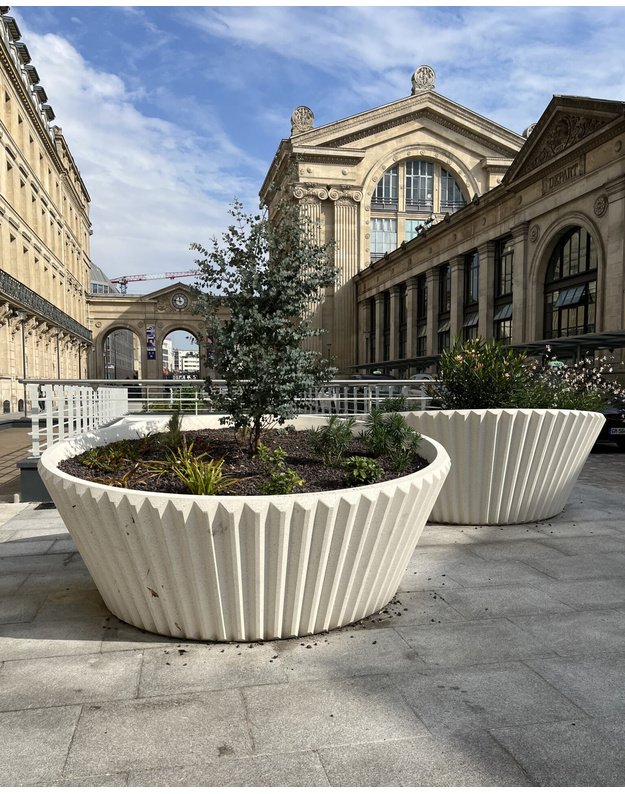
A large sculptural concrete planter with grooved relief, installed in an open or closed position.
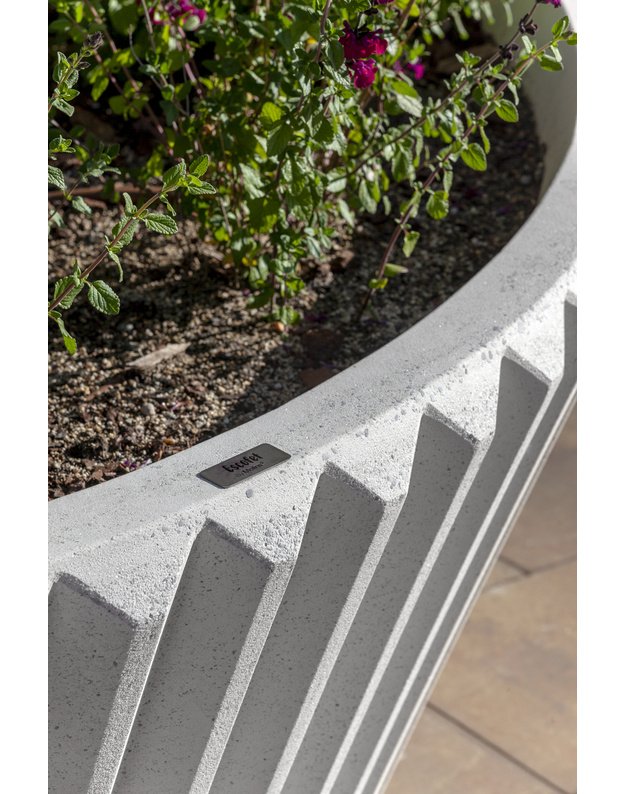
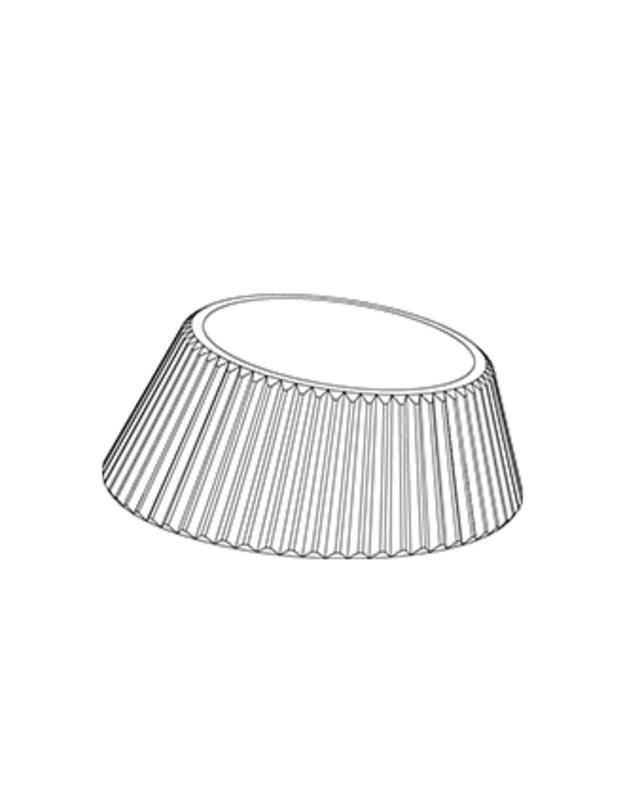
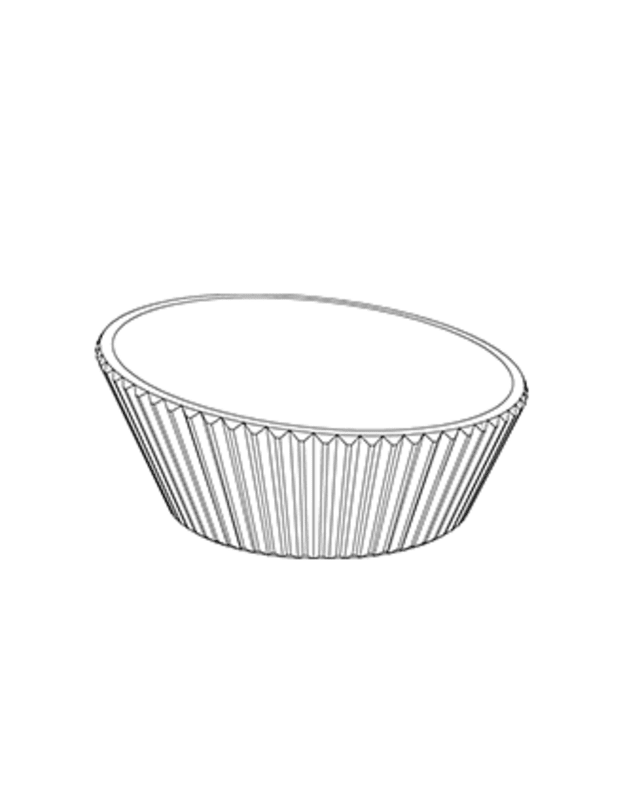
Lena's shape comes from a tilted cone cut by two non-parallel planes. Its outer surface has a deep grooved relief that creates a play of light and shadow. The planter can be installed in two positions: Lena open, with the larger diameter at the top, and Lena closed, with the larger diameter at the bottom. In both cases the base remains open, so it can stand directly on paving, sand or soil.
| Material | moulded concrete reinforced with stainless steel |
| Surface and finish | etched, waterproofed finish; colours from the standard Escofet colour chart |
| Dimensions | ø 235 cm, height 100 cm |
| Capacity | 2000 L |
| Weight | 1042 kg |
| Installation | free-standing and self-stabilising, no anchoring; on paving, water drains through the open base and the joint at the supports, and soil is retained by a double geotextile with a gravel layer or a porous concrete base |
| Designer | Manuel Ruisánchez |
| Manufacturer | Escofet (Barcelona, Spain) |
Large squares, shopping centre and station forecourts, parks and pedestrian areas, where the planter acts as sculpture, green accent and traffic barrier at once.
Combine both positions in one space – a group of open and closed Lenas looks more dynamic. When placing it on paving, plan for drainage so water can run off freely.
Concrete planters are heavy and stable, with a stone chip finish, so they also work as a natural barrier to traffic. Cor-Ten steel planters are much lighter, with modern shapes and a warm brownish tone, and go well with wood, concrete and greenery. Choose according to whether the planter needs to restrict traffic or mainly decorate the surroundings.
Concrete planters stand firmly without any fixings thanks to their weight. Cor-Ten planters are lighter, but they weigh much more when filled with soil. In locations exposed to wind, place tall, narrow planters on a level base, choose plants that are not too tall, or fix them to a wall.
Plants need drainage so that the roots do not stand in water. Put a layer of gravel at the bottom and a suitable growing medium on top. Cor-Ten planters have drainage holes in the bottom, so excess water drains away by itself.
A stable rust patina forms on the surface of Cor-Ten steel, protecting the metal and giving it a brownish tone. For the first few months, until the patina stabilises, the planter may leave brownish marks on light-coloured paving. So at first it is better to place it on darker surfacing or where such marks will not matter.
Yes, heavy concrete planters are often used to separate a pedestrian zone from the roadway and prevent cars from driving onto the pavement. Long planters are suitable for enclosing café terraces or small areas. This restricts traffic while also decorating the surroundings with greenery.
Concrete planters are heavy, so it is worth planning their location in advance – moving them later would be difficult. They are delivered and positioned with lifting equipment, and the largest models require a crane. The exact weight of each planter is stated in the product's technical data.
Yes. Concrete planters can be matched with concrete benches and waste bins in the same finish, while Cor-Ten planters go well with wooden equipment. Some planters belong to the same series as benches, so the space looks coherent.
Yes, we deliver and install throughout Lithuania – contact us on +370 652 32015, info@viskasmiestui.lt. Before delivering a heavy planter, we will discuss access and the installation location.