
Product code: ESC-GRASSHOPPER
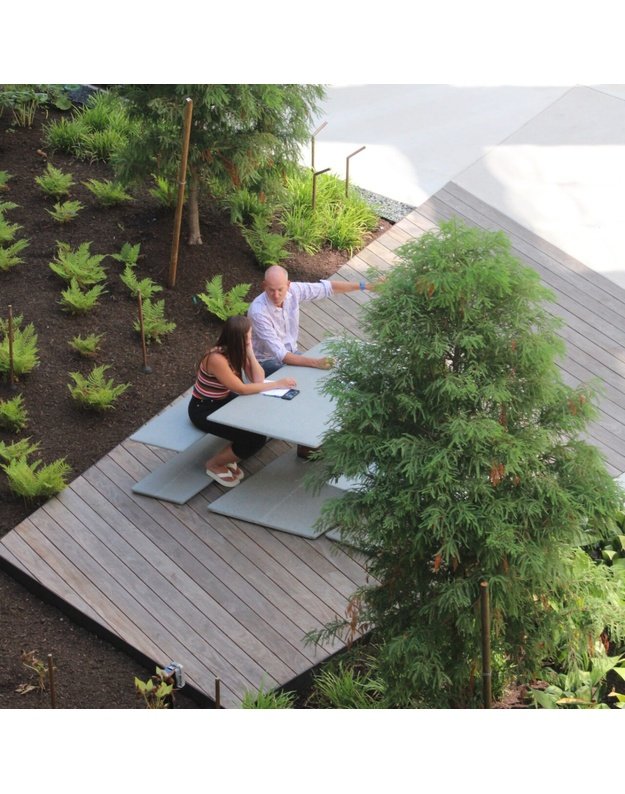
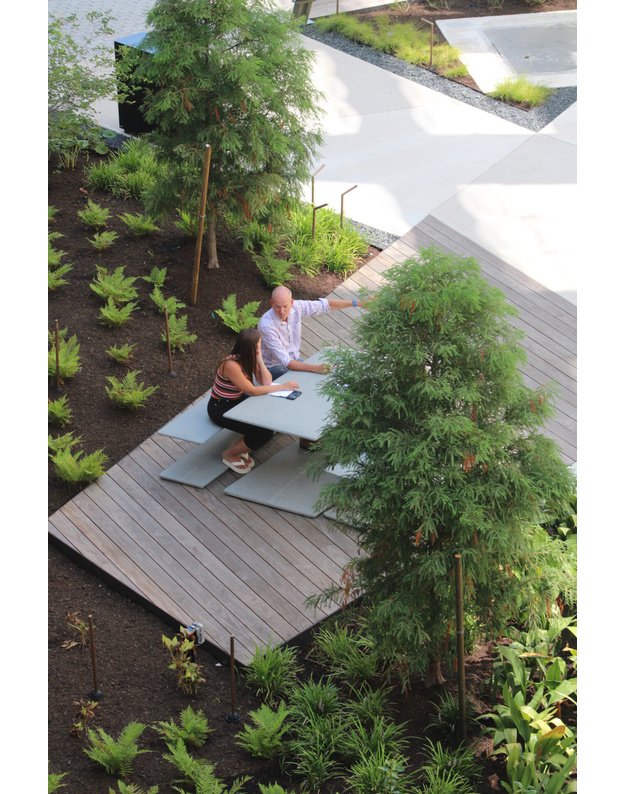
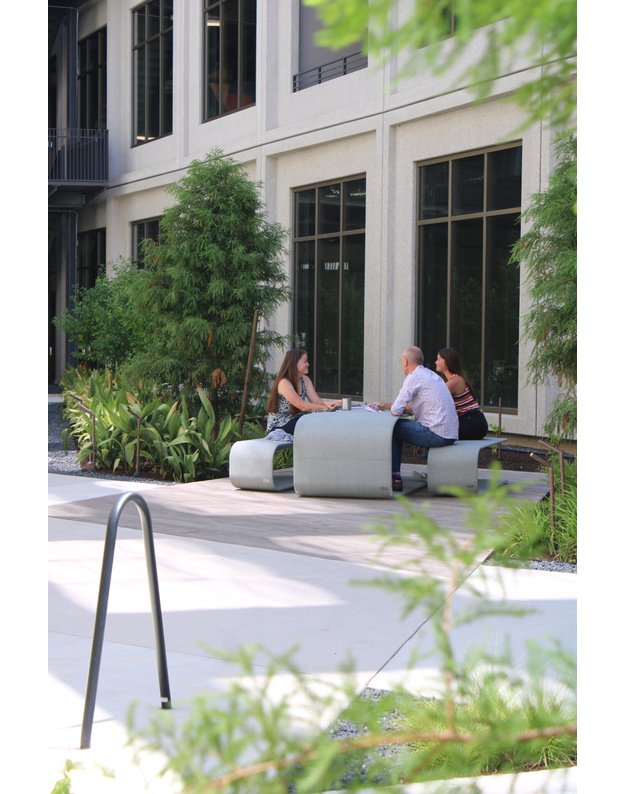
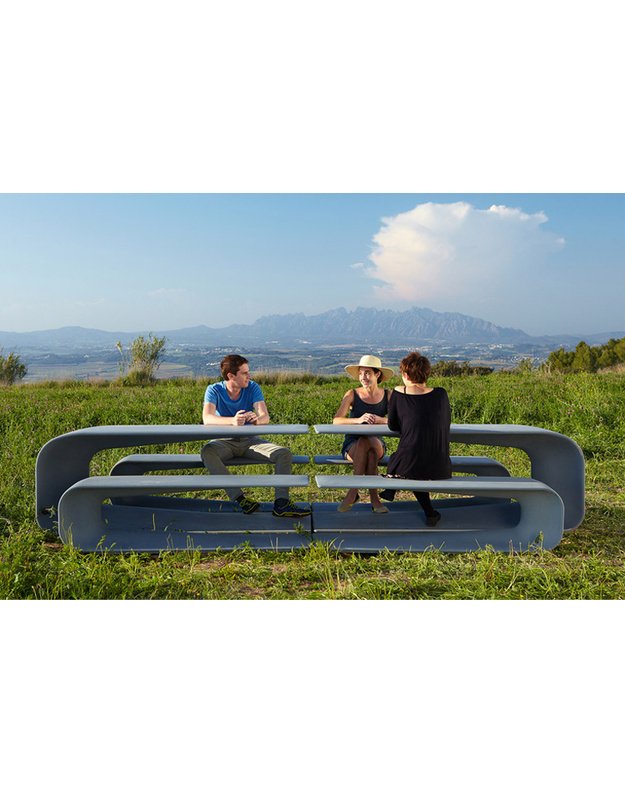
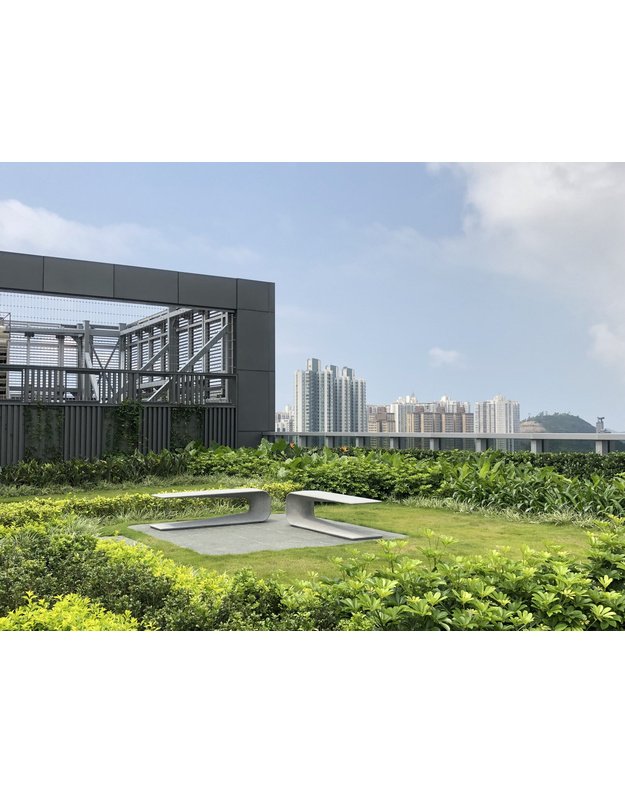
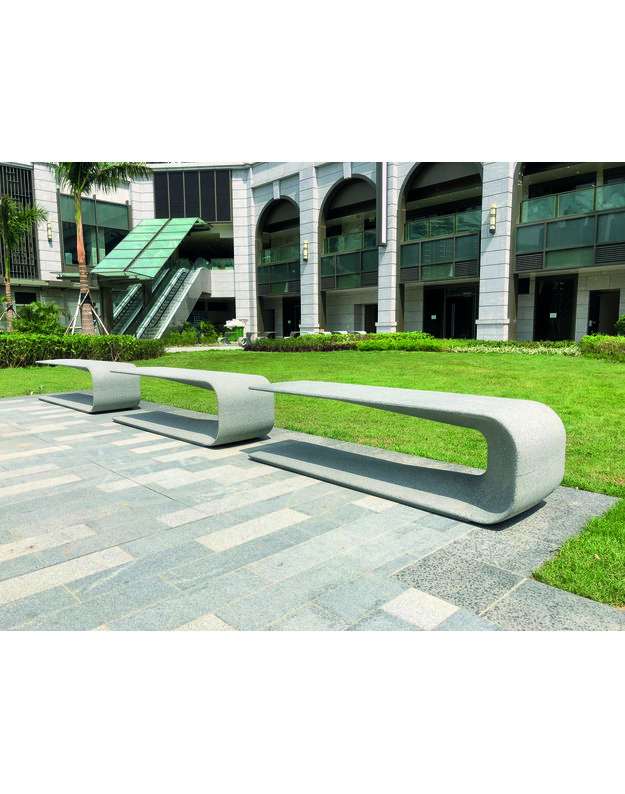
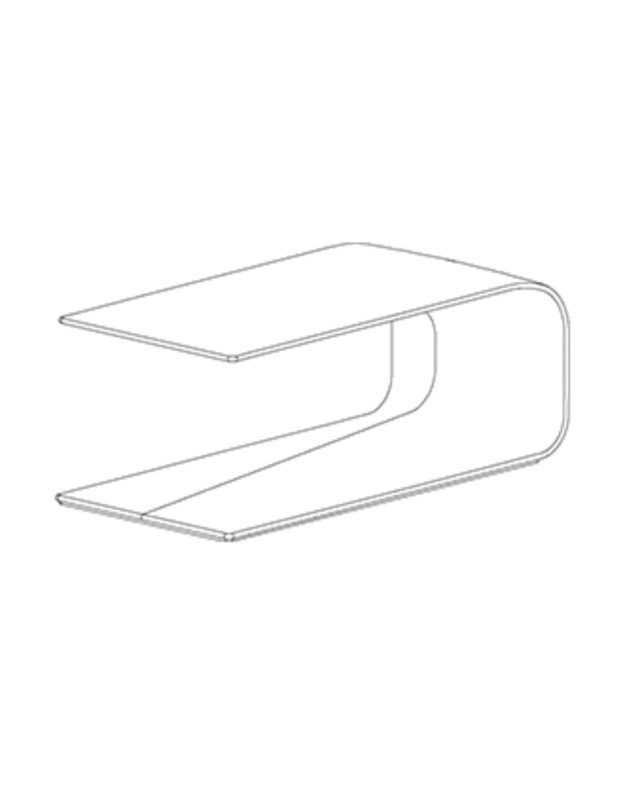
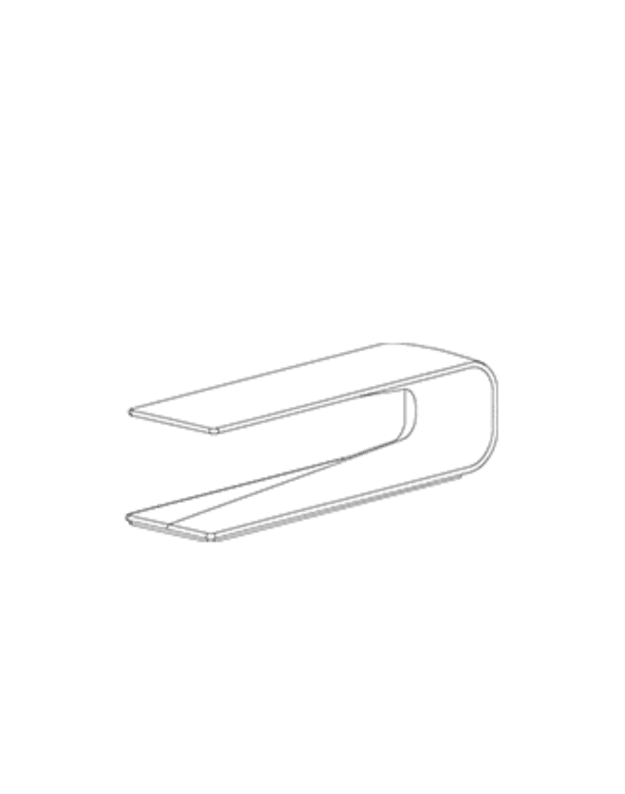
A cantilevered single-piece UHPC concrete bench and table that combine into 2 m or 4 m sets.
The Grasshopper collection comprises a cantilevered bench and table that push UHPC-Slimconcrete technology to its limits: a slim section, a light appearance and long durability. One end of the shape closes gently into a cosy spot for conversation, while the other opens up. The bench can stand on its own or, together with the table, form a 2 m table-and-bench set; two sets facing opposite ways create a 4 m table or bench.
Award: DELTA OPINION 2014.
| Material | single-piece UHPC-Slimconcrete reinforced with stainless steel |
| Surface and finish | etched and waterproofed or soft-polished (upper surface); colours from the standard Escofet colour chart |
| Dimensions | bench 160 × 45 × 45 cm; table 190 × 90 × 73 cm |
| Weight | bench 230 kg; table 670 kg |
| Installation | the table rests on the paving; benches should be fixed to the paving with screws; lifted with slings |
| Designer | Makoto Fukuda (2014) |
| Manufacturer | Escofet (Barcelona, Spain) |
Office and residential courtyards, parks, terraces and squares that call for outdoor furniture that looks light but is built to last.
Pair the table with the bench for a 2 m seating spot, or place two sets facing opposite ways for a 4 m table for larger groups. No maintenance is needed over its long service life.
For seating areas, parks and courtyards, benches with a backrest are a better fit – they are more comfortable for longer stays. In transit areas, at bus stops and near schools, backless benches are usually enough; they take up less space and can be sat on from both sides. For longer sitting, models with armrests or a higher backrest are more comfortable for older people.
Concrete benches are heavy and stable, suitable for squares and busy places. Steel benches with a galvanised and painted frame are lighter, so they are fixed to the base. Wooden slats on the seat are warmer and more pleasant than metal or concrete.
Heavy concrete benches usually stand stably without anchors. In public places it is recommended to fix steel benches to the base so that they are not moved around or carried off – anchors are included for some models. When placing on sand or gravel, small concrete footings are first poured under the legs.
Seats use impregnated and painted black alder, spruce, pine or other softwood, as well as weather-resistant acacia. For some models, composite can be chosen instead of wood. Clean the wood regularly, and when the coating wears, renew it with protective paint or oil.
The frames of steel benches are powder-coated, in most cases in the RAL palette. For concrete benches you can choose stone chips in different shades, and the wood is painted or oiled. Check the available options when ordering.
Yes. Modular benches allow you to create a seating line of the desired length or shape, and curved segments a circular seating area around a tree or flower bed. There are also benches with an integrated bike rack, which suit school or office entrances.
Yes, it is worth choosing a table together with benches from the same series – the surroundings then look coherent and the dimensions match each other. Like benches, outdoor tables must be sturdy, moisture-resistant and easy to maintain. You can also choose a waste bin from the same line for the seating area.
Yes, we deliver and install throughout Lithuania – contact us on +370 652 32015, info@viskasmiestui.lt. Heavy concrete benches are delivered and positioned with lifting equipment.
