
Product code: SUPERLOCK
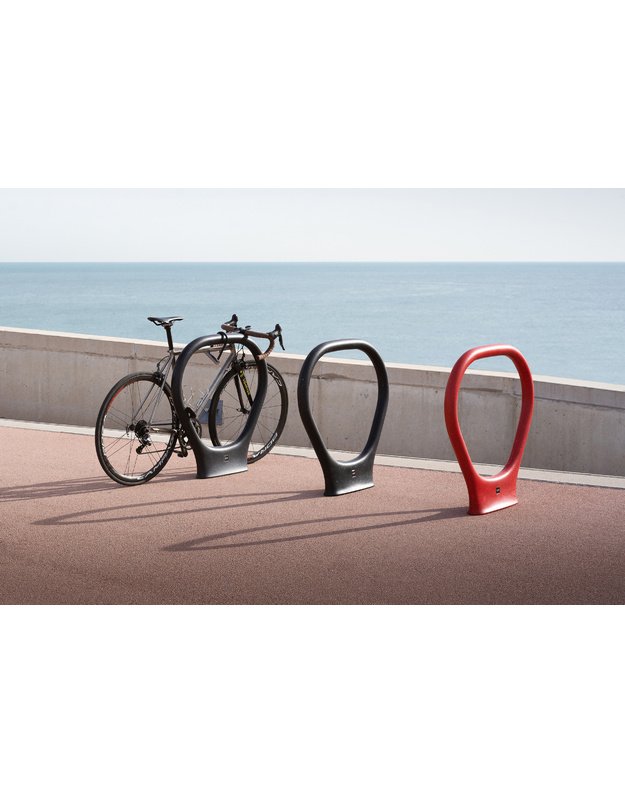
A vandal-resistant bike rack made of recycled polyethylene with a UHPC concrete core, also suitable for electric bikes.
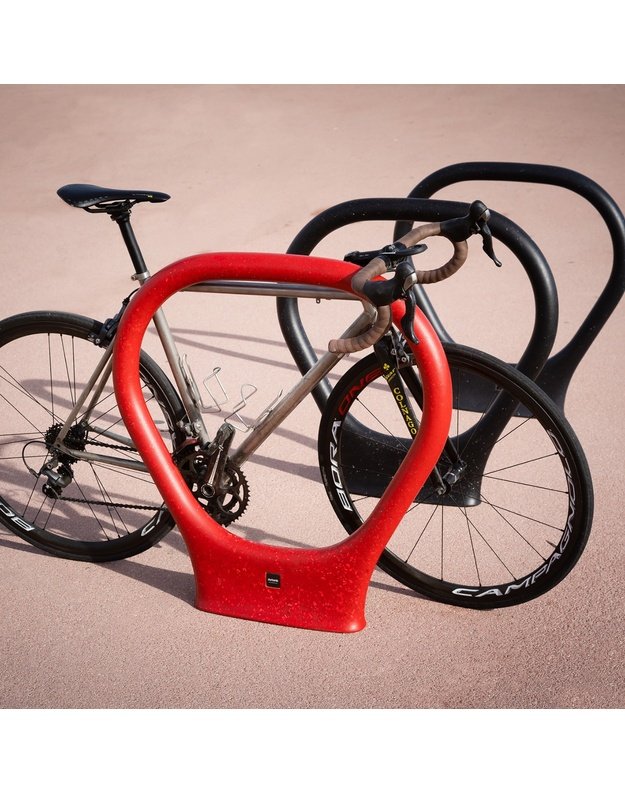
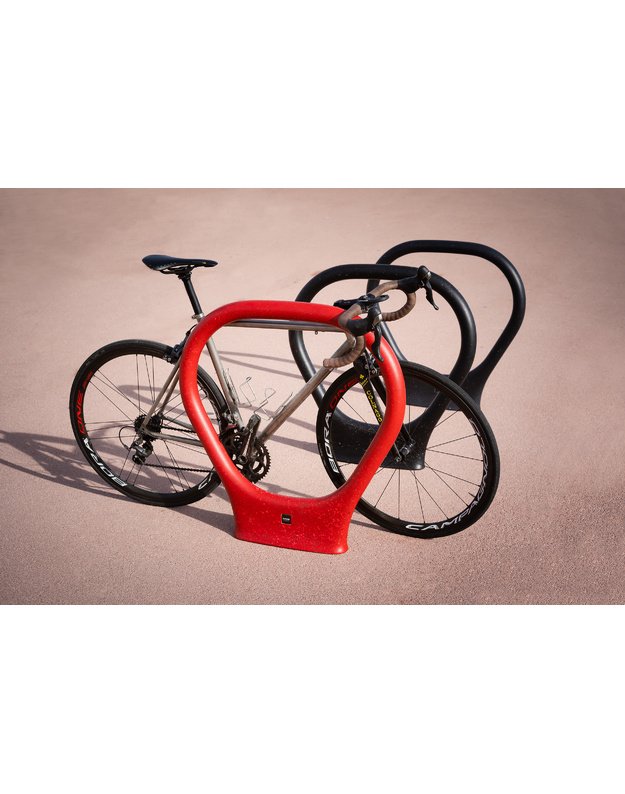
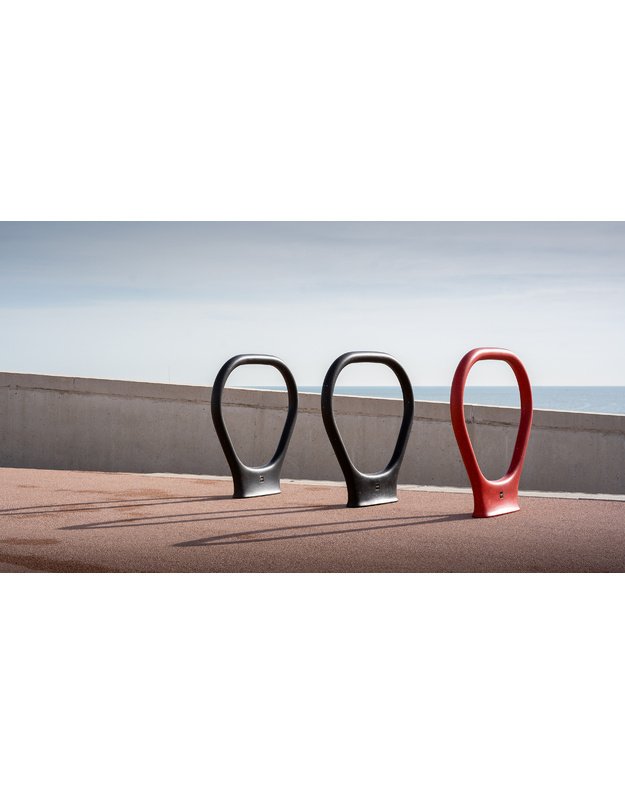
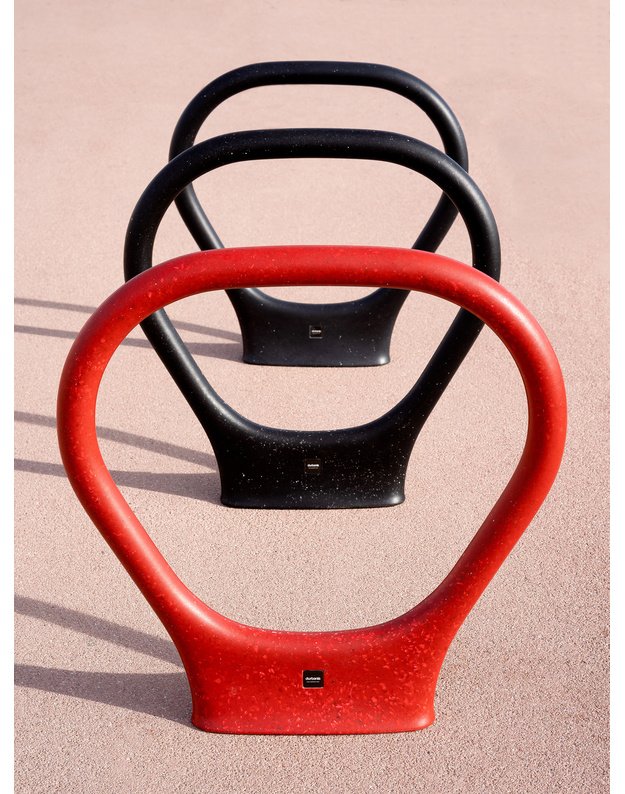
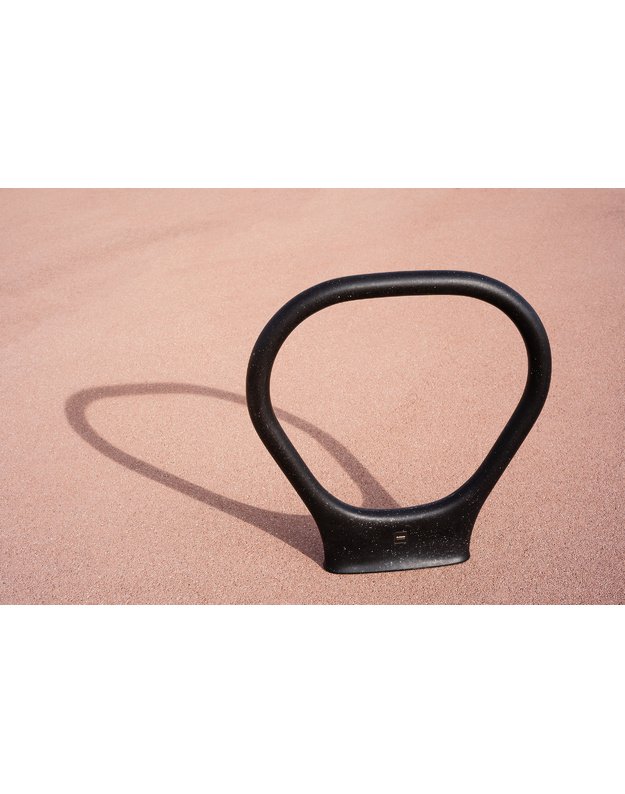
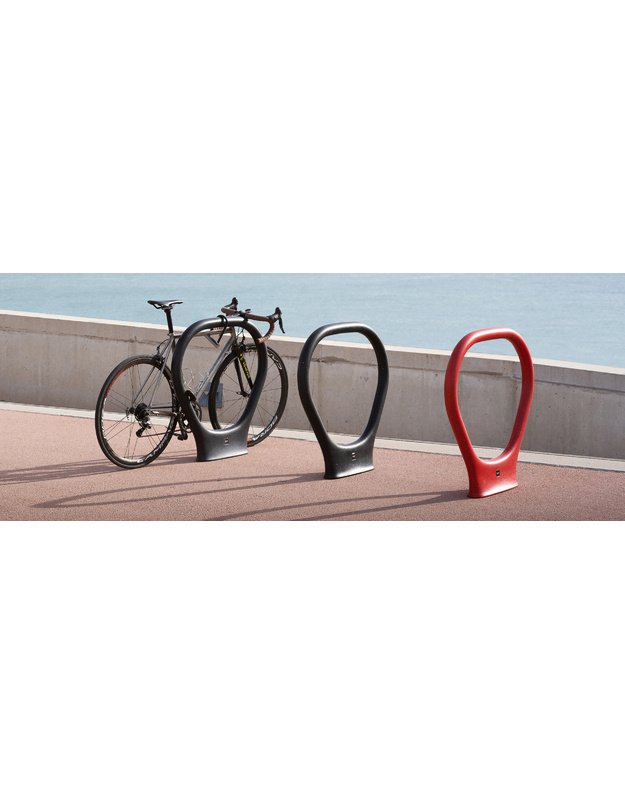
Superlock was created by the design studio "The Bicycle Laboratory" (Alex Fernández Camps). It is a large-format rack shaped like a rounded inverted trapezoid, so bikes can be locked from both sides. The rack is suitable for various types of bikes – both conventional and electric – and offers a high level of security, as a bike can be locked to it at three different points. The rack is made of recycled polyethylene and reinforced inside with ultra-high-performance concrete (UHPC) and 12 mm ribbed steel, making it resistant to vandalism, impacts and the weather. The shell is rotationally moulded in one piece, without seams or welds. The design is registered and protected with the European Union Intellectual Property Office.
| Design | The Bicycle Laboratory (Alex Fernández Camps) |
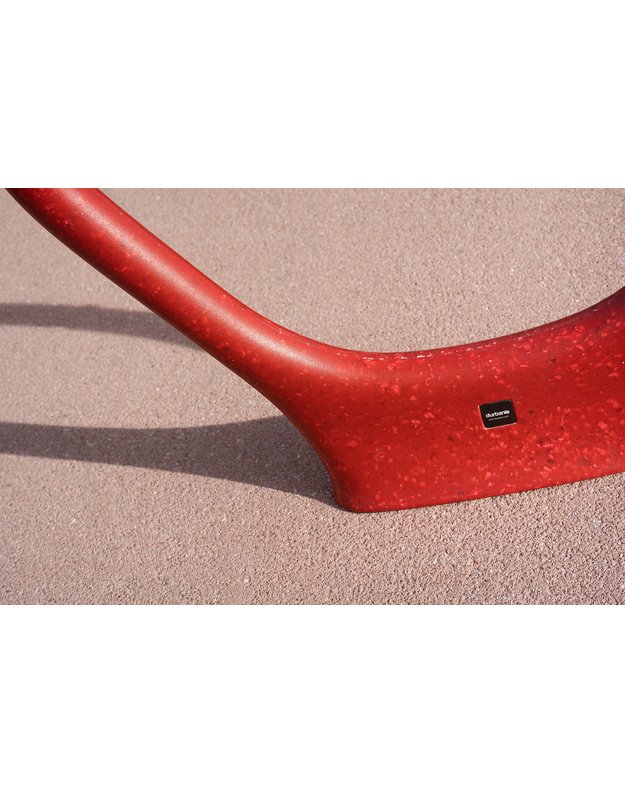
| Material | mass-coloured recycled polyethylene (LMDPE) with UV protection, ultra-high-performance concrete (UHPC) core reinforced with 12 mm ribbed steel |
| Dimensions | 830 × 120 × 850 mm (width × thickness × height) |
| Weight | 20 kg |
| Locking | three locking points |
| Flammability | Euroclass E according to EN 13501-1:2019 |
| Installation | set in concrete: the base is inserted into two holes drilled in the paving (recommended Ø 100 mm, 270 mm deep) |
| Certificates | production complies with ISO 14064-1 (greenhouse gas accounting) |
| Packaging | 20 pcs per pallet, 1200 × 800 × 850 mm, 400 kg |
| Maintenance | no special maintenance required, simply wash with hot pressurised water |
City squares, railway and bus stations, office and residential courtyards, universities and shopping centres – places where expensive or electric bikes are parked and secure locking is important.
Superlock pairs well with the same manufacturer's more compact Loclock rack – both are made of recycled polyethylene with a UHPC concrete core. Please specify the number of racks and your preferred colour in your enquiry.
First decide how many bikes need to be parked and where the rack will stand – outdoors on paving or indoors against a wall. Then consider whether it is important to lock the bike frame: U-shaped hoops are best for this. Finally, choose the material and colour to suit the surroundings.
Calculate based on peak season, when there are the most bikes, and leave some spare capacity. Some racks are made with different numbers of spaces or are modular, so spaces can be added later. Double-sided racks allow bikes to be parked on both sides and save space.
Most racks are bolted into firm paving with anchors, and some models can be set in concrete. Wall-mounted holders are fixed to the wall with anchors. For many models, anchors are included – this is stated in the product's technical data.
Yes. In this category you will find racks and wall-mounted holders designed for wider tyres and heavier bikes, as well as an e-bike station with a charging socket. The permitted tyre width or wheel gap for each model is stated in the product description. Compare it with your bike's tyres before buying.
Hot-dip galvanised and powder-coated steel is corrosion-resistant and lets you choose a colour. Stainless steel is unpainted, keeps its shiny look for a long time and suits prestigious locations. Both options are suitable for year-round outdoor use.
It is safest to lock the bike by the frame, not just the wheel – U-shaped hoops and similar racks are designed for this. Models with protective rubber keep the bike's paintwork free of scratches. Place the rack in a clearly visible and well-lit location.
Wall-mounted holders come in handy in bike rooms, garages and basements, where floor space is limited. A bike hung vertically takes up less space, and swivelling holders allow bikes to be placed closer together. Note the minimum room height stated in the description.
Yes, we deliver and install throughout Lithuania – contact us on +370 652 32015, info@viskasmiestui.lt. When planning a larger bike parking area, the installation diagram in the “Technical information” section is also helpful.
